Ecommerce · 7 min
How to Reduce Online Returns: A Practical Guide for Fashion Stores (2026)
A driver-by-driver playbook for cutting online returns: understand why customers send items back, then fix sizing, imagery, data, policy, and the fit uncertainty underneath it all.
Di Davide Mastricci, Founder · 23 luglio 2026
First, understand why customers return
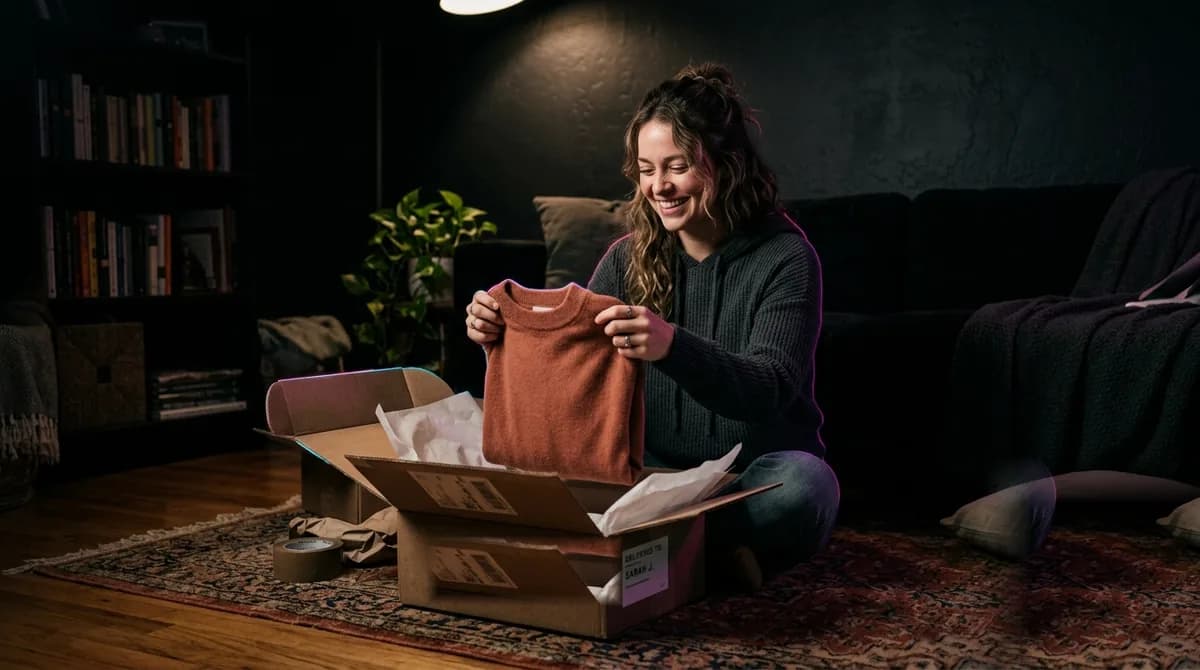
You cannot cut returns you do not understand. Before changing anything, capture a reason at the point of return so "why" becomes data. In fashion the answers cluster tightly: it did not fit, it did not look like the photo, or the shopper ordered several sizes on purpose. Fix the causes in that order of size, because they are not equal.
This guide walks each driver and the fix for it. For the same levers ranked strictly by impact, see how to reduce your return rate.
Fix sizing accuracy
Size and fit drive the majority of fashion returns, so this is where the largest gains live.
- Tie size charts to the actual garment, not a single brand-wide chart.
- Add fit notes in plain language: runs small, true to size, roomy in the hip.
- Keep sizing consistent across your own catalogue. A medium that behaves like a small in another line trains shoppers to bracket.
Get imagery and descriptions right
The second gap is expectation versus reality.
- Show the item on real bodies, not only a flat lay, and use short video where you can.
- Describe fabric, stretch, weight, and how the piece actually behaves when worn.
- Be honest about colour. A screen-accurate swatch prevents a return the moment the parcel opens.
Use fit and review data
Your own returns and reviews are a free research feed.
- Read reason codes by product, not in aggregate, so you can find the specific items that generate returns.
- Watch for repeated fit comments in reviews and feed them back into the size notes.
- Retire or rework the products that consistently come back. A chronic offender is cheaper to fix than to keep shipping.
Set policies that do not reward abuse
- A fair, clearly worded window builds trust. Hiding the rules generates disputes, not savings.
- Nudging exchanges over refunds keeps the revenue and the customer.
- Charging for returns can trim the rate, but weigh it against the repeat business it may cost. Policy manages the symptom, not the cause.
Make the return process smarter
When a return does happen, keep it low friction: a clear portal, a printable or paperless label, and fast refunds. A smooth return is how you keep a customer even on an order that did not work out.
The lever underneath all of them
Notice that most of the drivers above trace to one thing: the shopper could not tell how the item would fit and look before buying. Remove that uncertainty and you take pressure off every other lever at once.
That is what virtual try-on does. Aisthetix puts an AI fitting room on the product page so the shopper sees the garment on a real body before they commit, aimed squarely at the fit-driven majority of returns. The mechanism is in how virtual try-on reduces returns, and the build-versus-buy question in a returns app versus a prevention tool.
Key takeaways
- Capture return reasons, then fix the biggest cause first, which in fashion is almost always fit.
- Sizing, imagery, descriptions, and data are all levers, and they all reduce the same underlying uncertainty.
- Policy tuning helps at the margin but does not remove the doubt.
- Prevent the fit-driven return at the source with try-on, then measure the effect on your own products before trusting it.